


How Truck Driver Fatigue Leads to Serious Crashes on Worcester Roads
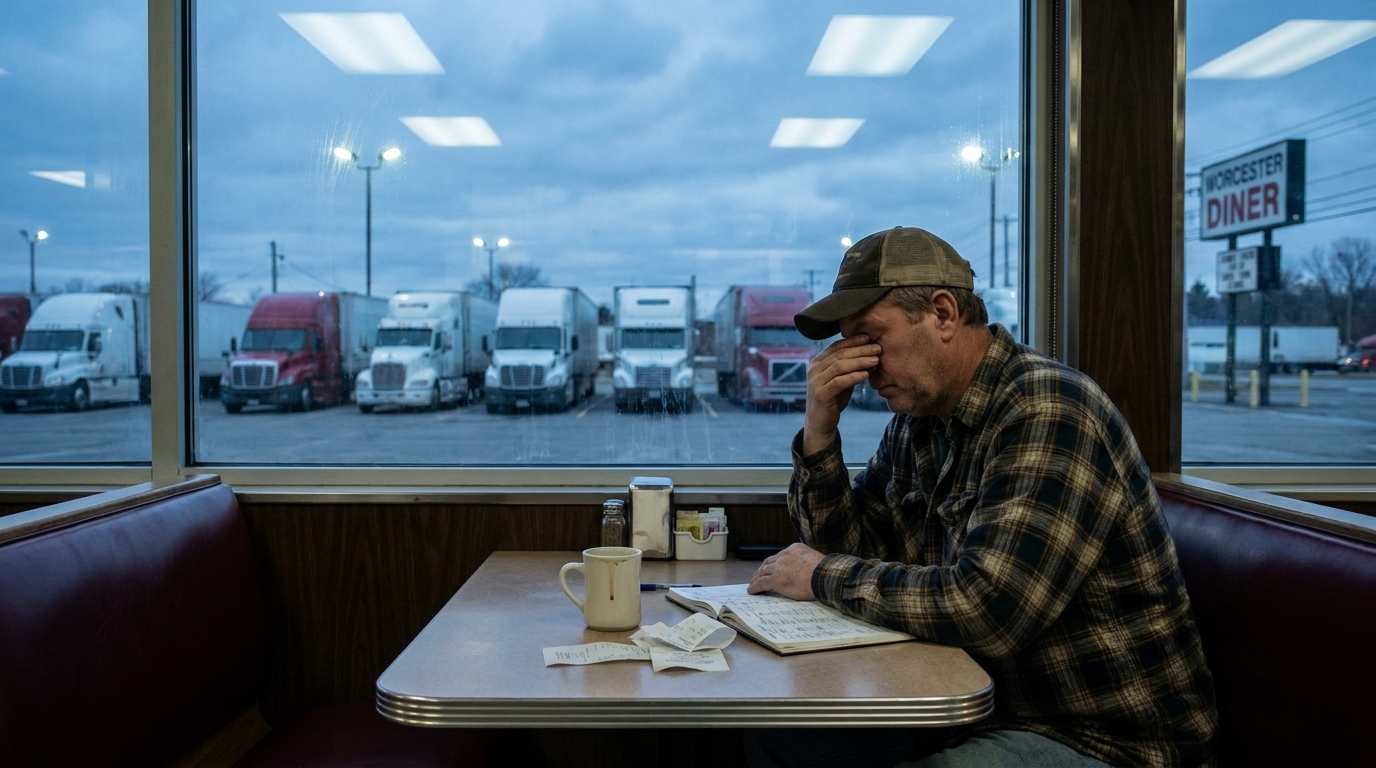
Truck driver fatigue is one of the leading contributors to catastrophic semi-truck collisions in Worcester, MA, and throughout Massachusetts. When a commercial truck driver operates while drowsy or exhausted, reaction times slow, judgment deteriorates, and crash risk increases dramatically. Fatigue can cause a driver hauling tens of thousands of pounds to drift across lanes, miss brake signals, or fail to respond to changing traffic conditions on busy corridors like I-290 or Route 9. Understanding how fatigue causes these wrecks is critical for holding negligent parties accountable.
If you or a loved one suffered injuries in a drowsy driving truck crash in Worcester, Ballin & Associates, LLC can help you understand your legal options. Call 508-882-2853 or reach out online to discuss your case.
What Federal Law Says About Truck Driver Fatigue Accidents Massachusetts
Federal regulation 49 CFR § 392.3 directly prohibits drivers from operating a commercial motor vehicle (CMV) while fatigued or ill and prohibits motor carriers from requiring or permitting such operation. The only narrow exception allowing continued operation while fatigued applies during a grave emergency, where stopping would actually increase danger to the driver, vehicle occupants, or other road users.
Drivers also retain the legal right to discontinue operation when they feel too fatigued or ill to drive safely. Neither a trucking company nor dispatcher can lawfully pressure a driver to keep driving against the driver’s safety judgment. When a trucking company ignores this protection or punishes drivers who exercise it, that conduct may serve as powerful evidence of negligence in a semi-truck fatigue injury claim.
💡 Pro Tip: If you were hit by a fatigued truck driver, request that your attorney preserve the driver’s electronic logging device (ELD) data promptly. This evidence is essential to proving hours-of-service violations.
Hours-of-Service Rules Designed to Prevent Fatigued Truck Driver Accidents in Massachusetts
The Federal Motor Carrier Safety Administration (FMCSA) enforces hours-of-service regulations that limit how long commercial truck drivers can operate before mandatory rest. On June 1, 2020, FMCSA published a final rule (85 FR 33396) revising four HOS provisions, effective September 29, 2020. These revisions aimed to provide greater operational flexibility while maintaining safety standards.
Key HOS Provisions Drivers Must Follow
The following table summarizes the core HOS requirements that apply to most long-haul truck drivers operating in and through Worcester:
| HOS Provision | Requirement |
|---|---|
| Daily Driving Limit | Maximum 11 hours of driving within a 14-hour on-duty window |
| 30-Minute Break | Required after 8 cumulative hours of driving time |
| Sleeper Berth Split | Minimum 10-hour off-duty period, which may be split into a period of at least 7 consecutive hours in the sleeper berth plus a period of at least 2 consecutive hours off-duty or in the sleeper berth, provided both periods total at least 10 hours |
| Adverse Driving Conditions | Extends the driving window by up to 2 additional hours during poor weather or road conditions |
How Violations Create Liability
When a trucking company or driver violates these HOS provisions and a crash results, the violation itself may serve as strong evidence of negligence. Plaintiffs in Massachusetts truck crash cases can use ELD records, dispatch logs, and fuel receipts to demonstrate that a driver exceeded allowable driving hours. If you suspect FMCSA hours violations strengthened your case, an attorney experienced in truck accident litigation can evaluate those records.
💡 Pro Tip: The 30-minute break requirement resets based on cumulative driving time, not total on-duty time. Ask your legal team to examine whether the driver’s break was compliant under the revised 2020 rule, as older interpretations may not apply.
Why Trucking Companies Share Liability for Fatigue-Related Crashes
Trucking companies bear significant legal responsibility when their drivers cause fatigue-related collisions. Under vicarious liability principles, a motor carrier that employs or contracts with a fatigued driver may be held accountable for the resulting harm. Holding trucking companies liable incentivizes them to adopt meaningful safety measures, including realistic scheduling, proper rest enforcement, and compliance monitoring.
More than 5,000 people die each year in crashes involving large trucks, representing approximately a 30% increase compared with a decade ago. Despite these alarming numbers, trucking companies carrying general freight across state lines are only required to carry $750,000 in liability insurance, a minimum Congress set in 1980 and has never updated. Serious injury costs can quickly exhaust that amount.
💡 Pro Tip: Do not accept an early settlement offer from a trucking company’s insurer without consulting an attorney. These initial offers frequently undervalue claims, particularly when long-term medical treatment or lost earning capacity is involved.
Common Warning Signs of a Fatigued Truck Driver on Worcester Roads
Recognizing the signs of a tired truck driver accident in MA can help you protect yourself and strengthen a potential legal claim. If you witnessed any of these behaviors before a collision, document them as soon as possible:
- Drifting between lanes or crossing the center line without correction
- Inconsistent speed, including sudden deceleration or failure to maintain highway pace
- Delayed reactions at intersections, traffic signals, or highway merges
- Failure to use turn signals or respond to road signs
- Striking rumble strips repeatedly on highways like I-290 or the Massachusetts Turnpike
These behaviors may support an inference of drowsy driving when combined with HOS records and other evidence. Courts may consider the totality of the circumstances, including whether the driver had adequate rest opportunities before the trip.
Proving Truck Driver Negligence in Worcester After a Fatigue Collision
Building a strong commercial truck fatigue collision case requires gathering time-sensitive evidence before the trucking company can alter or destroy it. Massachusetts follows a modified comparative negligence framework under Mass. Gen. Laws ch. 231, § 85, which means your recovery will be reduced by your percentage of fault but is not barred unless your fault exceeds 50%. The key challenge in fatigue cases is proving the driver was actually drowsy at the time of the collision.
Evidence That Supports a Fatigue Claim
The strongest Worcester truck crash legal help begins with immediate evidence preservation. Critical documents and data include:
- ELD and paper logbook records showing hours driven before the crash
- Dispatch communications, load assignments, and delivery deadlines
- GPS and telematics data from the truck’s onboard systems
- The driver’s cell phone records, which may show late-night activity before an early departure
- Witness statements describing erratic driving behavior
An experienced truck accident lawyer in Worcester MA can issue spoliation letters to prevent the trucking company from destroying or overwriting this data. Time is critical because carriers are required to retain ELD records for a minimum of six months under federal regulations, but related crash-event data (such as ECM/EDR snapshots and dashcam footage) can be overwritten within days or weeks if the truck returns to service.
💡 Pro Tip: Massachusetts has a three-year statute of limitations for most personal injury claims under Mass. Gen. Laws ch. 260, § 2A. However, evidence preservation demands action far sooner. Consider consulting an attorney within days of a crash, not months.
The Real Cost of a Semi-Truck Injury in Worcester
Victims of fatigued truck driver accidents in Massachusetts often face life-altering physical, emotional, and financial consequences. A fully loaded tractor-trailer can weigh up to 80,000 pounds, meaning even a low-speed collision can cause traumatic brain injuries, spinal cord damage, multiple fractures, and internal organ injuries. The financial toll frequently includes emergency surgery, months of rehabilitation, ongoing pain management, and inability to return to work.
Massachusetts law allows injured plaintiffs to pursue both economic and non-economic damages. Economic damages cover quantifiable losses like medical bills and lost wages, while non-economic damages address pain and suffering, loss of consortium, and diminished quality of life. In cases involving particularly reckless conduct, such as a carrier knowingly forcing a driver to exceed HOS limits set by the FMCSA, additional remedies may be available.
💡 Pro Tip: Keep a detailed journal of your symptoms, limitations, and emotional state after a truck crash. This contemporaneous record can be valuable evidence when calculating non-economic damages months or years later.
Frequently Asked Questions
1. How do I know if a truck driver was fatigued when they hit me in Worcester?
What evidence reveals driver fatigue?
You may not know immediately, but an attorney can subpoena the driver’s electronic logging device data, dispatch records, and cell phone records. These documents reveal how many hours the driver was on the road before the crash and whether mandatory rest breaks were taken. Witness testimony about erratic driving behavior can further support a fatigue claim.
2. Can I sue the trucking company, or only the driver?
Who is legally responsible for a fatigued driving crash?
In many cases, you can pursue claims against both the driver and the trucking company. Under vicarious liability principles, the carrier may be liable for its driver’s negligent conduct. Additionally, the company may face direct liability for negligent hiring, supervision, or scheduling practices that contributed to driver fatigue.
3. What is the deadline for filing a truck accident lawsuit in Massachusetts?
Understanding the statute of limitations
Massachusetts generally allows three years from the date of injury to file a personal injury lawsuit under Mass. Gen. Laws ch. 260, § 2A. However, certain circumstances may alter this timeline, including claims involving government entities. Courts interpret tolling exceptions narrowly, so prompt action is advisable.
4. What if the trucking company says their driver was not fatigued?
Challenging the defense’s version of events
Trucking companies and their insurers routinely deny fatigue as a contributing factor. This is why independent evidence, such as ELD data, GPS logs, and crash reconstruction analysis, matters so much. An attorney experienced in these cases can retain qualified professionals to analyze the data and challenge the defense narrative.
5. How much insurance do trucking companies carry for crashes in Massachusetts?
Understanding minimum coverage limits
Most trucking companies carrying general freight across state lines are required to maintain at least $750,000 in liability insurance. This minimum was set by Congress in 1980 and has never been adjusted for inflation. Given the severity of injuries in semi-truck collisions, this amount may be insufficient to cover a victim’s full losses.
Protecting Your Rights After a Worcester Truck Fatigue Crash
Truck driver fatigue remains a preventable yet persistent cause of devastating crashes on Worcester roads. Federal regulations under 49 CFR § 392.3 and the FMCSA’s hours-of-service framework exist specifically to combat drowsy driving, but violations continue when carriers prioritize delivery schedules over safety. If you or a family member suffered serious injuries in a collision involving a fatigued commercial truck driver, you have legal options to pursue full compensation.
The team at Ballin & Associates, LLC is ready to review your case, preserve critical evidence, and fight for the recovery you deserve. Call 508-882-2853 or contact us today to schedule a consultation.