


Why a Spoliation Letter Can Make or Break Your Worcester Truck Accident Case
After a semi-truck collision in Worcester, critical evidence starts disappearing almost immediately. Electronic logging device (ELD) data, dashcam footage, GPS records, and onboard event recorder information can be overwritten, deleted, or "lost", though ELD records are subject to a federally mandated minimum six-month retention period under FMCSA regulations, while event data recorder (EDR/black box) data and dashcam footage can be overwritten much sooner, sometimes within about 30 days if the truck is returned to service. A spoliation letter is a formal written demand sent to the trucking company, its insurer, and other relevant parties requiring them to preserve all evidence related to your accident. Without one, the proof you need to establish liability may vanish before you can use it.
If you or a loved one suffered serious injuries in a semi-truck crash, Ballin & Associates, LLC can help you take swift action to preserve critical evidence. Call 508-882-2853 or reach out online today.
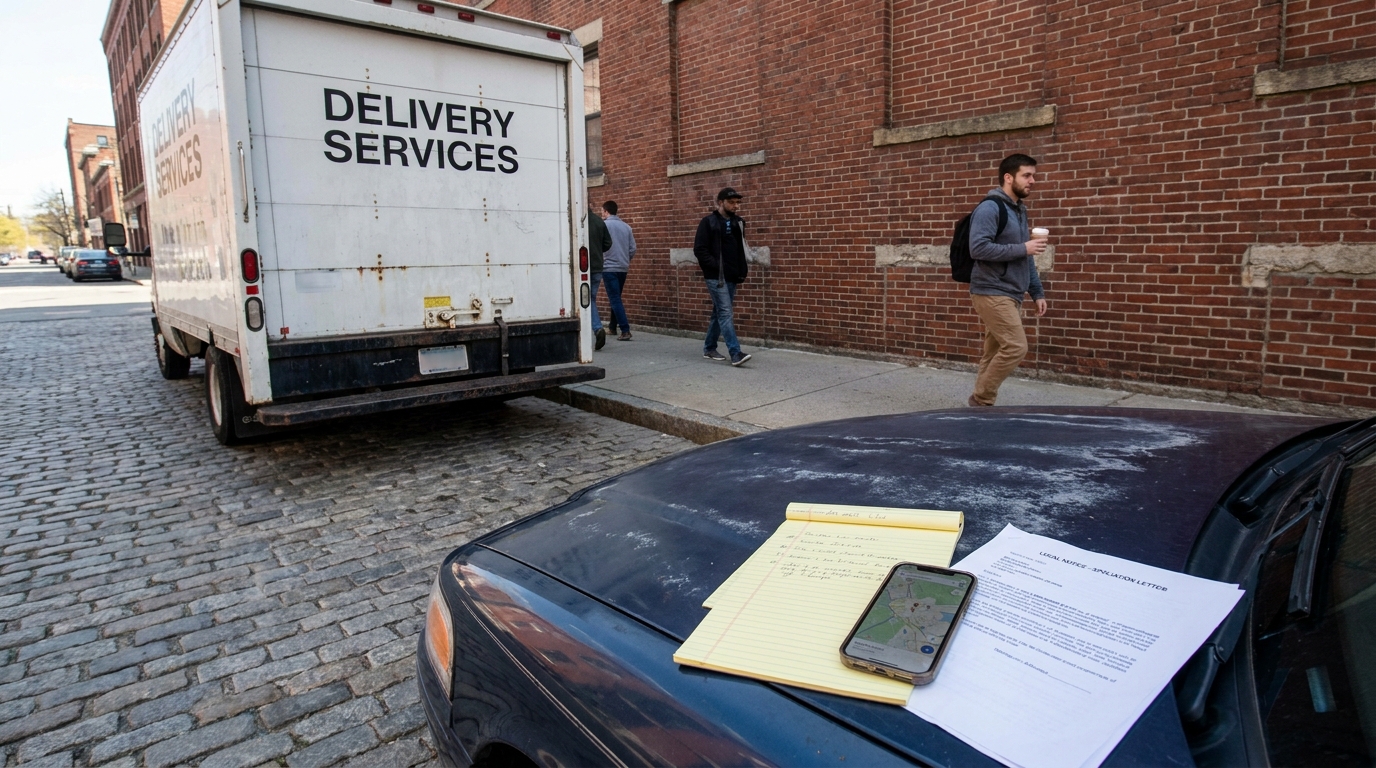
How Evidence Disappears After a Worcester Semi-Truck Crash
Trucking companies and their insurers have protocols that routinely result in evidence destruction. Fleet management systems may overwrite event data recorder information and other onboard recorder data on short cycles, sometimes as brief as 30 days if the truck is returned to service. ELD data, however, is subject to a federally mandated minimum retention period of six months under FMCSA regulations and is therefore not typically overwritten on a 30-day cycle. Dashcam footage may be recorded over. Maintenance logs, driver qualification files, and internal communications can be discarded according to standard retention schedules. This destruction is not necessarily malicious, but the result is the same: evidence you need to prove negligence, hours-of-service violations, or mechanical failure may no longer exist.
The problem is compounded when a trucking company knows a claim might be coming. Under Massachusetts spoliation law, a judge has discretion to impose sanctions for evidence spoliation or destruction, whether negligent or intentional. However, sanctions only help if your legal team can show the company had a duty to preserve the evidence and failed to do so. That is where a spoliation letter comes in.
💡 Pro Tip: Ask your attorney to send a spoliation letter within the first 72 hours after a truck crash. EDR data and dashcam footage are among the first types of evidence to be overwritten.
What a Spoliation Letter Actually Does
A spoliation letter formally puts the trucking company and other parties on notice that they must preserve all evidence related to your accident. It typically identifies the crash details and provides a detailed list of evidence categories that must be retained, including:
- Electronic logging device (ELD) and hours-of-service records
- Event data recorder (EDR or "black box") downloads
- Dashcam, surveillance, or body camera footage
- Driver qualification files, training records, and drug/alcohol testing results
- Vehicle inspection and maintenance logs
- GPS and route data
- Internal communications, including emails and text messages
By sending this letter, your attorney establishes that the opposing party knew evidence might be relevant to possible legal action. Under Massachusetts case law, the duty to preserve evidence can arise even before a lawsuit is filed, if a reasonable person would realize the evidence might be relevant (Kippenhan v. Chaulk Servs., Inc., 428 Mass. 124, 127 (1998)). The spoliation letter removes any doubt about whether the trucking company was on notice.
💡 Pro Tip: A spoliation letter should be sent by certified mail, email, and fax when possible to create multiple records of delivery. The more proof you have of receipt, the stronger your position if evidence later goes missing.
When the Duty to Preserve Evidence Begins in Massachusetts
Massachusetts courts have recognized that the obligation to preserve evidence can exist well before any lawsuit is filed. The Supreme Judicial Court restated in Scott v. Garfield, 454 Mass. 790, 798 (2009), that sanctions may be imposed where a litigant knows or reasonably should know that evidence might be relevant to a possible action, though discrepancies exist in how lower courts have applied this standard.
The "Possible" vs. "Likely" Litigation Standard
Massachusetts courts have not always applied this standard consistently. The SJC has used both "possible action" language (Kippenhan v. Chaulk Servs., Inc., 428 Mass. 124, 127 (1998)) and "likely" language (Fletcher v. Dorchester Mut. Ins. Co., 437 Mass. 544, 549, 50 (2002)), without definitively resolving whether the standards differ. In JFF Cecilia, LLC v. Weiner Ventures, LLC, the Superior Court initially found litigation was not "likely," but after remand applied the broader "possible action" standard, resulting in spoliation sanctions including adverse inference jury instructions.
This uncertainty makes prompt action critical. A well-drafted spoliation letter strengthens your position regardless of which standard a court applies because it makes the possibility of litigation unmistakably clear.
💡 Pro Tip: Even if you are unsure whether you will file a lawsuit, having your attorney send a spoliation letter preserves your options. The letter does not commit you to litigation, but it does protect evidence you may need later.
Sanctions for Destroying Truck Accident Evidence
When evidence is destroyed after a duty to preserve has been established, Massachusetts courts can impose meaningful sanctions. Under Mass. Guide to Evidence § 1102, judges have broad discretion to craft remedies. However, the mere fact that evidence is missing and was in a party’s possession is insufficient to establish spoliation (Sullivan v. Connolly, 91 Mass. App. Ct. 56, 58, 59 (2017)). Once the moving party produces sufficient evidence that another party lost or destroyed relevant evidence, the burden shifts to the alleged spoliator to prove it was not at fault (Scott v. Garfield, 454 Mass. 790, 799 (2009)).
Types of Sanctions Courts May Impose
Courts generally craft sanctions carefully tailored to remedy the precise unfairness caused by the spoliation (Keene v. Brigham & Women’s Hosp., Inc., 439 Mass. 223, 235 (2003)). Potential sanctions include:
| Sanction | When Typically Applied |
|---|---|
| Adverse inference jury instruction | Evidence was negligently or intentionally destroyed after duty arose |
| Exclusion of related testimony | Party benefits from absence of destroyed evidence |
| Monetary sanctions or fee shifting | Spoliation caused unnecessary litigation costs |
| Default judgment or dismissal | Willful, bad-faith destruction that fundamentally undermines the case |
Massachusetts does not recognize a separate tort cause of action for spoliation (Fletcher v. Dorchester Mut. Ins. Co., 437 Mass. 544 (2002)). Remedies are limited to sanctions within the underlying case itself.
Holding Non-Parties Accountable
The duty to preserve can also extend to non-parties under certain circumstances. While a duty does not arise automatically from a non-party’s mere knowledge of potential litigation, it may be imposed through subpoenas duces tecum or preservation agreements (Fletcher, 437 Mass. at 548, 549). For Worcester truck accident cases, this can be critical when evidence is held by repair shops, third-party logistics companies, or ELD system vendors.
💡 Pro Tip: Your attorney can send spoliation letters to multiple parties, not just the trucking company. Maintenance providers, freight brokers, and ELD service providers may all hold relevant data.
How Spoliation Letters Connect to Your 18 Wheeler Accident Lawyer Massachusetts Claim Timeline
Time is critical when pursuing a Worcester semi-truck injury claim. Under Massachusetts General Laws Chapter 260, Section 2A sets the statute of limitations for personal injury actions, which applies directly to truck accident claims. The spoliation letter framework underscores why truck accident victims must act promptly: evidence preservation requests must be made while the right to sue remains active.
Additionally, Massachusetts law requires every motor vehicle liability policy to provide Personal Injury Protection (PIP) benefits under M.G.L. Chapter 90, § 34M. Understanding how PIP intersects with your injury claim is another reason to consult with a Worcester truck accident attorney as early as possible.
💡 Pro Tip: Do not assume that filing an insurance claim or receiving PIP benefits extends your deadline to file a lawsuit. The statute of limitations runs independently, and missing it can permanently bar your case.
Why Black Box and ELD Data Matters for Your 18 Wheeler Accident Lawyer Massachusetts Case
Event data recorders and ELD systems capture objective, time-stamped information that can be pivotal in proving fault. Black box data may record vehicle speed, braking patterns, throttle position, and airbag deployment in the seconds before a crash. ELD records document hours-of-service compliance and can reveal whether a driver exceeded federal limits. This truck black box evidence can directly contradict a trucking company’s version of events and establish regulatory violations supporting your negligence claim.
Without a spoliation letter, this data is vulnerable. Once data is overwritten or a vehicle is repaired, the information is gone permanently.
Frequently Asked Questions
1. What is a spoliation letter in a truck accident case?
A spoliation letter is a formal written demand sent to the trucking company and other relevant parties instructing them to preserve all evidence related to your accident. It covers physical evidence, electronic data, documents, and communications. The letter creates a documented record that the opposing party was on notice of their preservation obligations, which can support sanctions if evidence is later destroyed.
2. How soon after a Worcester truck accident should a spoliation letter be sent?
Ideally, a spoliation letter should be sent within days of the crash. Event data recorder (EDR) data and dashcam footage can be overwritten on short cycles. ELD data, by contrast, is subject to a six-month retention requirement under federal FMCSA rules, so it is not typically overwritten on the same short cycle. The sooner the letter goes out, the more likely critical evidence will be preserved.
3. Can a trucking company face penalties for destroying evidence in Massachusetts?
Yes, Massachusetts courts can impose sanctions ranging from adverse inference jury instructions to default judgment. Under Mass. Guide to Evidence § 1102, judges have discretion to sanction both negligent and intentional destruction. Courts generally tailor sanctions to remedy the precise unfairness caused by spoliation. The victim must first show that a duty to preserve existed and that relevant evidence was lost, at which point the burden shifts to the alleged spoliator.
4. Does a spoliation letter guarantee that evidence will be preserved?
No, a spoliation letter does not guarantee preservation, but it significantly strengthens your legal position. If a party destroys evidence after receiving a spoliation letter, your attorney can argue the destruction was at minimum negligent and potentially willful. This can open the door to sanctions that may include allowing the jury to infer that the destroyed evidence was unfavorable to the trucking company.
5. Can non-parties like repair shops or ELD vendors be required to preserve evidence?
Under certain circumstances, yes. While a non-party’s mere knowledge of potential litigation does not automatically create a duty to preserve, that duty may be imposed through subpoenas duces tecum or preservation agreements. Your attorney can send preservation demands to third parties who hold relevant data.
Protecting Your Worcester Truck Accident Claim Starts with Evidence
A spoliation letter is one of the most important early steps in any semi-truck injury claim in Worcester. It puts trucking companies on notice, triggers legal preservation obligations, and positions your case for sanctions if critical evidence disappears. Massachusetts law provides real tools to hold parties accountable for evidence destruction, but those tools only work when victims act quickly. The strength of your claim depends on the evidence available to support it.
Do not wait for critical truck accident evidence to disappear. Contact Ballin & Associates, LLC today by calling 508-882-2853 or scheduling a consultation online to discuss your Worcester semi-truck injury case.