


Massachusetts Attorneys Turn To Whiplash Associated Disorder Grade 2 Research To Strengthen Neck Injury Claims
Key Takeaways: Whiplash associated disorder grade 2 involves neck pain paired with musculoskeletal signs, and Massachusetts attorneys rely on imaging, emergency records, and sustained therapy notes to prove it. Because state law imposes a monetary tort threshold, careful WAD grade II documentation often determines whether a claimant can recover pain-and-suffering damages. Massachusetts follows modified comparative negligence with a 51 percent bar, so liability evidence works alongside medical proof. A three-year filing deadline generally applies, with narrow exceptions that courts interpret cautiously. Statutory evidentiary rules also shape how physician opinions reach a jury. Every case depends on its specific facts.
Recent legal commentary and updated state-law surveys have renewed attention on how soft-tissue neck injuries are documented and valued in Massachusetts auto claims. For anyone injured in a Boston collision, the practical stakes are significant, because the strength of the medical record frequently controls whether an injury claim clears the state’s tort threshold. Understanding how attorneys use clinical research on neck trauma can help you protect your rights from the day of the crash.
This article explains, in plain terms, why Grade 2 whiplash matters under Massachusetts law and how counsel builds these cases. It also outlines the deadlines, evidentiary rules, and comparative-fault principles that shape recovery. The goal is practical understanding, not individualized legal advice.
What Whiplash Associated Disorder Grade 2 Actually Means
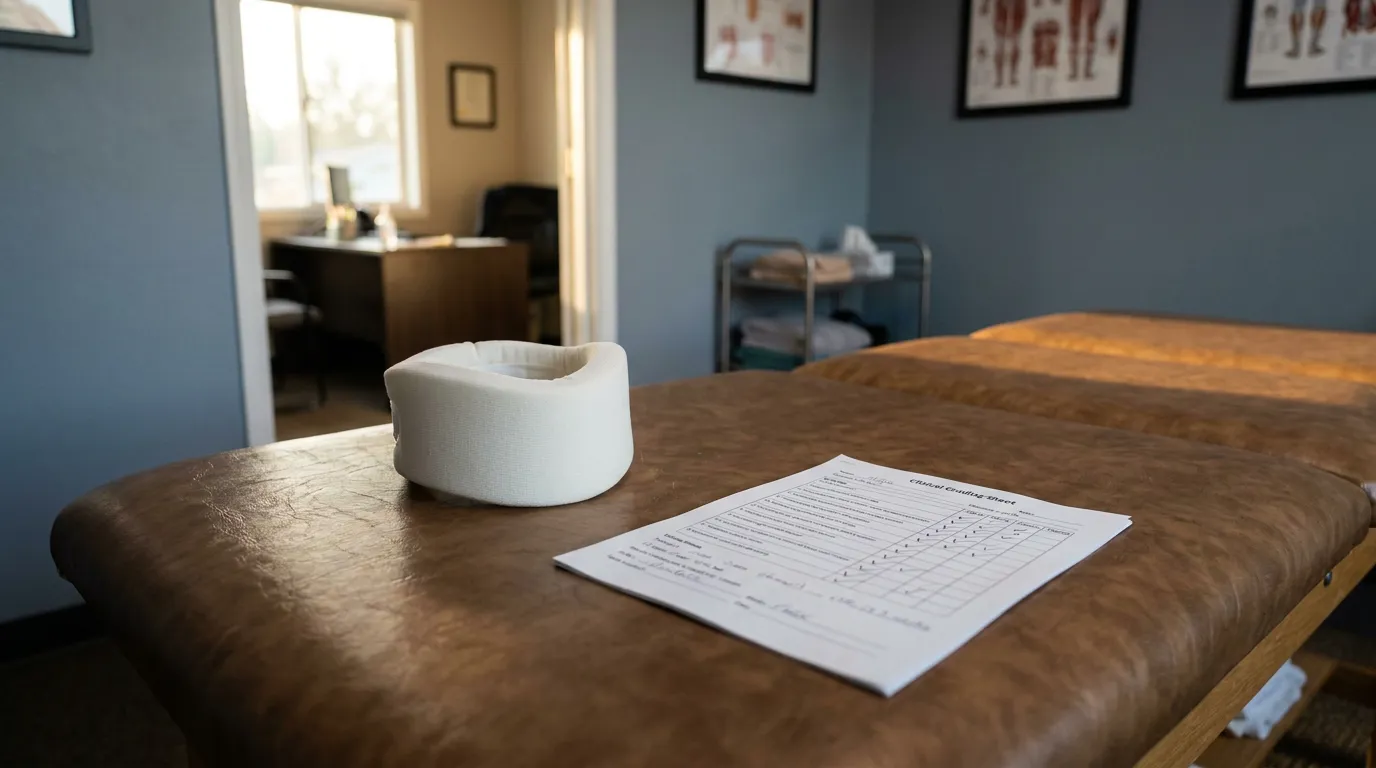
Whiplash associated disorder grade 2 describes neck complaints accompanied by objective musculoskeletal findings, such as reduced range of motion or point tenderness. This grade generally involves no fracture and no disfigurement, which places it squarely within the category of soft-tissue injuries that insurers frequently scrutinize. The clinical picture can nonetheless be disabling and persistent.
These findings matter because Massachusetts restricts pain-and-suffering recovery in motor vehicle cases. Under Chapter 231, Section 6D, recovery for pain and suffering in auto tort actions is generally barred unless reasonable and necessary medical expenses exceed $2,000, or the injury causes death, loss of a body member, permanent and serious disfigurement, a fracture, or qualifying loss of sight or hearing. Because Grade 2 whiplash usually lacks those enumerated serious injuries, most claimants must clear the monetary threshold.
The threshold counts a broad range of costs, which shapes how attorneys assemble proof. Chapter 231, Section 6D counts reasonable and necessary medical, surgical, x-ray, dental, prosthetic, ambulance, hospital, professional nursing, and funeral expenses toward the $2,000 figure. As a result, attorneys documenting WAD grade II cases lean heavily on imaging, emergency evaluation, and sustained physical therapy records both to prove the disorder and to cross the statutory gate.
Why Medical Research And Documentation Drive These Claims
Whiplash medical research gives attorneys an objective framework for translating subjective neck pain into credible injury claim evidence. Standardized grading helps counsel connect a client’s symptoms to recognized clinical categories, which supports both causation and damages. This is one reason proving neck injury often turns on the quality of the record rather than the severity of the crash alone.
Building The Causation Record
Car accident causation analysis begins with identifying who was responsible for the vehicle. Under Chapter 231, Section 85A, evidence that a vehicle was registered to the defendant at the time of the collision is prima facie evidence that it was operated by someone for whom the defendant was legally responsible, and the defendant must affirmatively plead and prove otherwise. For a Grade 2 whiplash plaintiff, this can shift part of the liability burden and let counsel focus resources on medical causation.
Delayed-onset symptoms make timing analysis important. Because neck pain, stiffness, and musculoskeletal findings can persist or worsen over months, attorneys frequently document the progression carefully from the first emergency visit forward. Consistent treatment notes help rebut the common defense argument that a gap in care signals a minor or unrelated injury.
Getting Physician Opinions Into Evidence
Massachusetts evidence law addresses when a physician’s report and opinions can be admitted. Under Chapter 233, Section 79H, the medical report of a deceased physician who attended or examined the plaintiff, including expressions of medical opinion, may be admitted at the trial judge’s discretion. Anything in that report touching liability is excluded, and the opposing party retains the right to introduce evidence to limit, modify, contradict, or rebut it.
This rule underscores why thorough, physician-authored records are so valuable. Detailed chronic pain proof authored by treating clinicians can carry weight even when a witness becomes unavailable. Attorneys generally encourage clients to keep every appointment and to describe symptoms accurately and consistently.
A Boston Scenario: How Documentation Changes The Outcome
Consider a hypothetical Boston commuter rear-ended on Storrow Drive who feels only mild stiffness at the scene. Two days later, her neck pain intensifies, and an urgent care visit documents reduced range of motion and point tenderness consistent with a Grade 2 disorder. She follows through with imaging and several weeks of physical therapy.
In this scenario, the accumulating records serve two purposes at once. They help establish the diagnosis, and they build toward the $2,000 threshold that generally governs pain-and-suffering recovery. Had she skipped care because the injury seemed minor, both her health and her claim could have suffered.
Her decision to document early also protects against comparative-fault arguments. If an insurer contends she was partly responsible, strong medical and liability evidence helps preserve the value of her claim. This is precisely where experienced counsel and consistent records matter most.
Comparative Fault And Filing Deadlines In Massachusetts
Massachusetts follows a modified comparative negligence system with a 51 percent bar. Under this framework, a Boston whiplash claimant found more than 50 percent at fault for the crash generally recovers nothing, and a plaintiff’s fault percentage directly discounts any award. National comparisons in the Justia modified comparative negligence survey help explain why identical Grade 2 injuries can be valued very differently across states.
Fault allocation affects the damages side independently of the medical proof. Documentation of WAD Grade 2 findings supports the value of the injury, while the fault percentage separately scales the final recovery. Because both levers move the outcome, attorneys pair clinical findings with strong liability evidence, and you can learn more about the evidence auto accident lawyers use to establish responsibility.
Timing is equally critical, and several rules can apply. Key deadlines that Massachusetts injury claimants often encounter include the following:
- General tort deadline: A three-year period generally runs from when the cause of action accrues, under the state’s three-year statute of limitations for personal injury actions.
- Accrual and discovery: Because the clock runs from accrual rather than strictly from the crash date, delayed-onset symptoms may raise accrual questions, though courts interpret such exceptions narrowly.
- Hit-and-run claims: When an at-fault operator flees, an injured party may, under certain circumstances, face additional notice conditions, including a strict police and registry notice requirement, and should confirm any applicable deadline promptly with counsel.
- Tolling situations: Limited circumstances such as minority, incapacity, defendant absence, or fraudulent concealment may alter the timeline, but these exceptions are applied cautiously.
These deadlines are not automatic or absolute, and they carry conditions. Civil filing deadlines differ from administrative notice requirements, and missing either can jeopardize a claim. Anyone unsure of a deadline should seek guidance promptly rather than assume an extension applies.
Practical Steps For Protecting A Grade 2 Whiplash Claim
Practical habits in the days and weeks after a crash often shape the strength of an eventual claim. Small documentation choices can have an outsized effect on WAD grade II documentation and, ultimately, on recovery. The following steps reflect what commonly helps injured claimants.
Consider these plaintiff-focused practices:
- Seek prompt medical evaluation and describe every symptom accurately.
- Attend follow-up and physical therapy appointments consistently.
- Preserve emergency, imaging, and billing records that count toward the threshold.
- Photograph vehicle damage and the scene when possible.
- Keep a symptom journal to support chronic pain proof over time.
A knowledgeable Massachusetts injury lawyer can help organize this evidence effectively. Working with a dedicated whiplash associated disorder grade 2 lawyer may help you understand how the threshold, deadlines, and comparative-fault rules apply to your situation. Because outcomes depend on specific facts, individualized review is important.
How Does This Impact Me?
What Does The Tort Threshold Mean For My Claim?
In many cases, it means your recovery for pain and suffering depends on documented medical expenses. If your reasonable and necessary treatment costs exceed $2,000, or your injury falls within an enumerated serious category, you may qualify to recover. Because Grade 2 whiplash rarely involves those serious injuries, consistent records generally matter a great deal.
Does Comparative Fault Reduce What I Can Recover?
It can, because Massachusetts reduces damages in proportion to a plaintiff’s negligence. If you are found more than 50 percent at fault, you generally recover nothing under the 51 percent bar. Strong liability evidence helps protect the value of your claim.
How Long Do I Have To File?
A three-year period generally applies from when the cause of action accrues. Certain situations, such as hit-and-run collisions or delayed discovery, may alter the timeline in limited circumstances. Courts interpret these exceptions narrowly, so acting promptly is prudent.
What Should I Do Next After A Neck Injury?
Prioritize your health, then preserve documentation. Continue recommended treatment, keep your records organized, and avoid gaps in care that insurers may exploit. Consulting counsel early can help you avoid missteps that weaken a claim.
Turning Clinical Research Into Real-World Recovery
Grade 2 whiplash sits at the intersection of medicine, evidence law, and comparative-fault principles in Massachusetts. Attorneys use standardized clinical research, thorough physician documentation, and statutory tools to prove causation, satisfy the tort threshold, and rebut fault arguments. The strength of the record frequently determines whether a legitimate injury claim advances.
For injured Boston-area drivers, passengers, and cyclists, the lesson is practical and immediate. Document early, treat consistently, and understand that deadlines and thresholds carry conditions that reward prompt action. Every claim ultimately turns on its own facts.
If you have questions about a neck injury claim, informed guidance is available. Ballin & Associates, LLC helps injured Massachusetts claimants understand their options, and you can contact us today or call 508-882-2853 to discuss how these rules may affect your situation.